Beyond Binary: A Colorful Approach to Data Encoding
QR codes are ubiquitous. They facilitate everything from payments and logins to sharing Wi-Fi credentials and accessing restaurant menus. Their widespread adoption stems from maturity, standardization, optimization, and surprising resilience. Yet, a fundamental limitation persists: QR codes represent data using only two states – black and white. This binary approach means each module in a QR code represents a single binary choice.
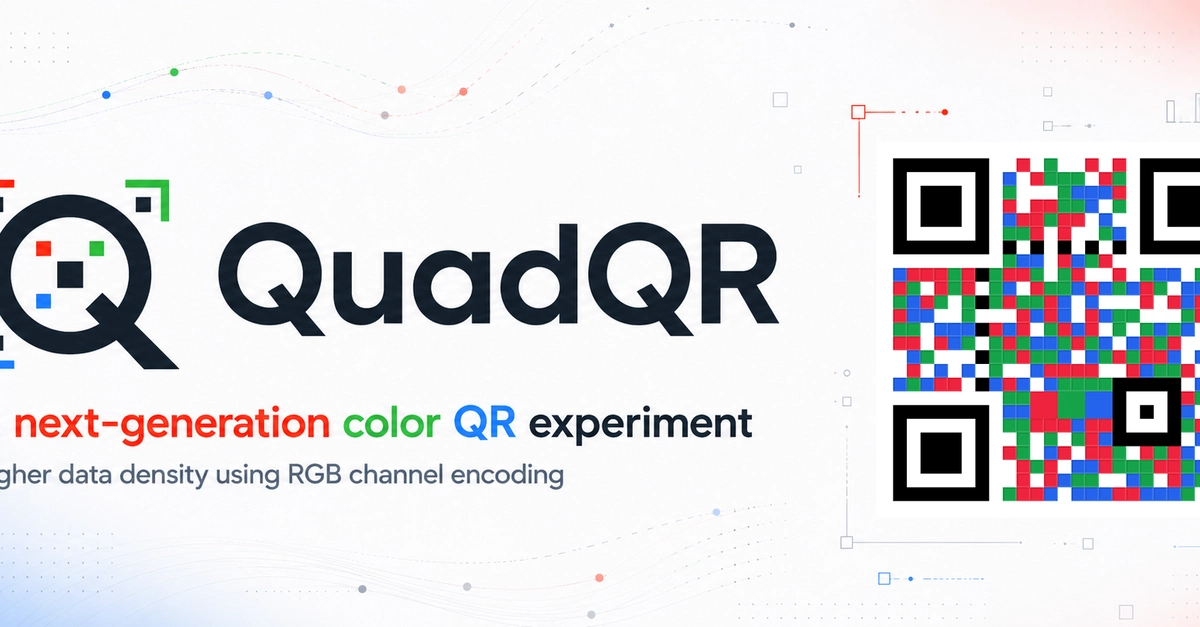
This limitation inspired developer Akansh Sirohi to question the status quo. "Why are we still representing data using only two visible states when the cameras scanning these codes can distinguish millions of colors?" Sirohi pondered. This question led to the development of a novel, QR-inspired code that leverages four distinct colors to encode information, significantly increasing data density and introducing built-in encryption capabilities.
The Mechanics of a Four-Color Code
The core innovation lies in expanding the data states per module. While a traditional QR code module is binary (0 or 1), Sirohi's four-color code uses four distinct colors. This quadruples the information capacity of each module. If we consider a simple mapping:
Color A → 00
Color B → 01
Color C → 10
Color D → 11
Each color module can now represent two bits of data, instead of one. This translates directly to a higher data storage capacity within a similarly sized or even smaller physical footprint compared to a standard QR code. For instance, a code designed to hold the same amount of data as a QR code could be physically smaller, or a code of the same size could hold four times the data.
Enhanced Data Density and Reduced Footprint
The practical implication of this increased data density is significant. For applications requiring the encoding of large amounts of information, such as complex URLs, extensive configuration data, or even small text files, the four-color code offers a more efficient solution. This could lead to smaller physical tags or labels, which is particularly beneficial in scenarios where space is constrained, like on small electronic components, intricate product packaging, or even embedded within other visual designs where a large QR code would be obtrusive.
Consider a scenario where a product needs to link to a detailed user manual or a software update. A traditional QR code might require a larger print area. With the four-color system, the same information could be encoded in a more compact visual element, improving aesthetics and ease of integration. This enhanced density also means fewer modules are needed for the same data payload, potentially leading to faster scanning times as the scanner has less area to process.
Integrated Encryption for Enhanced Security
Beyond data density, Sirohi's design incorporates encryption directly into the encoding scheme. This is a critical differentiator from standard QR codes, which typically rely on external mechanisms for data security. By integrating encryption, the four-color code offers a more robust and inherent layer of protection for sensitive information.
The specifics of the encryption method are not detailed in the initial concept, but the implication is that the visual pattern itself, when scanned, would require a decryption key or process to reveal the underlying data. This moves beyond simple error correction found in QR codes, which only protects against physical damage or poor scan quality. Instead, this encryption layer aims to protect the data's confidentiality from unauthorized viewing. This is particularly relevant for applications involving personal data, secure authentication tokens, or proprietary information that should not be easily readable by anyone with a standard QR scanner.
Imagine using such a code for secure device pairing. A user scans the code, but the device's software, possessing the necessary decryption key, interprets the data. A standard phone camera app would likely display an unintelligible string of characters or an error, preventing accidental exposure of sensitive pairing information. This approach could simplify secure onboarding processes and reduce the attack surface associated with transmitting sensitive data via visual codes.
The Future of Visual Data Encoding
While QR codes have set a high bar for usability and reliability, the limitations of their binary representation are becoming more apparent in a world demanding higher data throughput and enhanced security. Sirohi's four-color code presents a compelling evolution, demonstrating that visual data encoding can move beyond simple black and white. The ability to store more data in less space and to bake in encryption from the ground up addresses key challenges in modern application design.
The success of this approach will hinge on several factors: the development of robust scanning algorithms that can accurately distinguish between the four colors under various lighting conditions, the standardization of the encoding and encryption protocols, and the ease with which developers can integrate this new system into existing workflows. However, the fundamental concept—leveraging the full spectrum of color to represent data—opens a new frontier for visual information transfer.
What remains to be seen is how this technology will fare against the entrenched ecosystem of QR codes. Will the added complexity of color recognition and encryption be a barrier to adoption, or will the benefits of increased density and security prove compelling enough for developers and users alike to embrace this more colorful future of data encoding?