The Call to Adventure
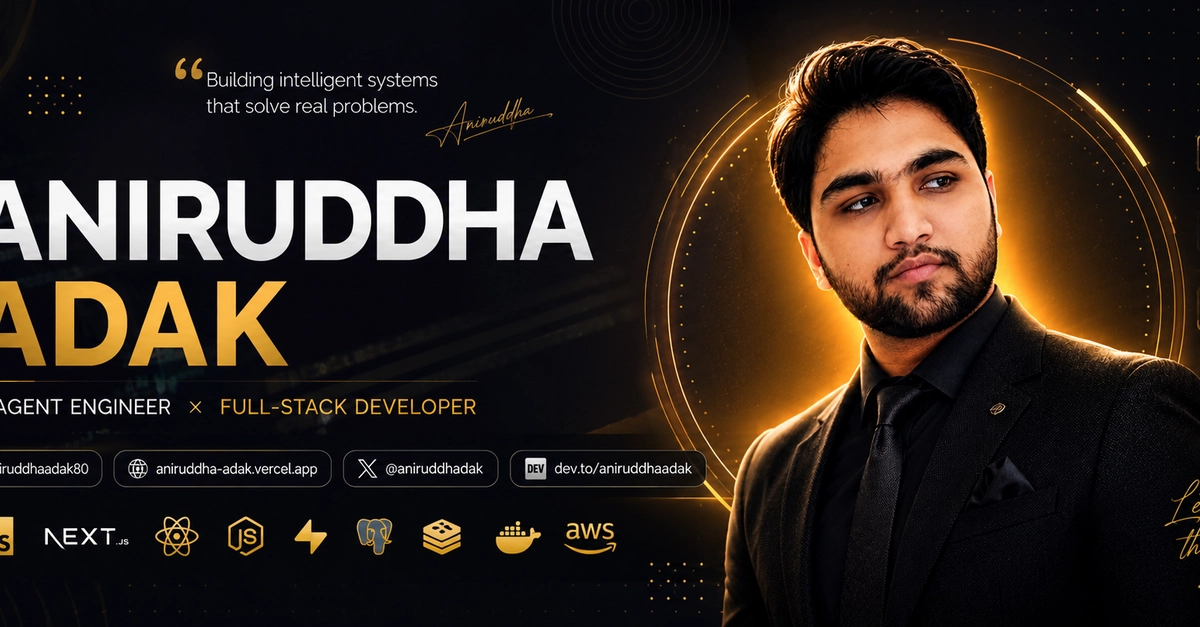
The summer started like any other for Aniruddha Adak, an AI Agent Engineer and Full-Stack Developer. Coffee in hand, browsing GitHub, he stumbled upon a repository with a neglected issue tracker. The bugs reported were not ignored out of apathy, but due to their sheer difficulty. These were the insidious types: race conditions, platform edge cases, security blind spots. The kind that demand hours of staring at a screen before a solution finally clicks. Adak, submitting this as part of DEV's Summer Bug Smash powered by Sentry, decided to take on the challenge.
His goal: to dive deep, understand the root causes of these persistent issues, and contribute meaningful fixes. This wasn't just about closing tickets; it was a personal quest to understand the intricate, often hidden, failure modes of complex software systems. The repository's maintainers, though perhaps overwhelmed, had left a trail of breadcrumbs – the bug reports themselves – waiting for someone with a "stubborn refusal to give up."
A Deep Dive into the Codebase
Adak's approach was systematic. He didn't just patch symptoms; he aimed to understand the underlying architecture and identify the systemic weaknesses that allowed bugs to fester. This involved a meticulous review of hundreds of Pull Requests (PRs), not just those he authored, but also those that came before, to grasp the evolution of the codebase and the recurring patterns of failure. He learned to trace the lifecycle of data, understand inter-process communication, and identify potential concurrency issues that only manifest under specific, hard-to-reproduce conditions.
The sheer volume of work—373 merged PRs—speaks to the depth of the issues and the persistence required. Each PR represented a problem identified, diagnosed, and solved. This process is a microcosm of software development itself: a continuous cycle of problem-solving, testing, and refinement. For Adak, it was an accelerated learning curve, compressing months or even years of experience into a single summer. He was not just fixing bugs; he was becoming intimately familiar with the software's DNA, its strengths, and its critical vulnerabilities.
Lessons Learned: Beyond the Code
The experience offered profound insights, extending far beyond technical prowess. Adak emphasizes that debugging is as much a mental exercise as a technical one. A "well-rested mind armed with the right tools and a stubborn refusal to give up" is the most effective debugger. This highlights the importance of mental fortitude and strategic problem-solving in tackling complex technical challenges. The ability to step away, clear one's head, and return with fresh perspective is often the key to unlocking a stubborn bug.
Furthermore, the summer of sleuthing underscored the value of open-source contributions. By engaging with a public repository, Adak not only improved the software for its users but also honed his skills and built a tangible portfolio of work. It demonstrated a commitment to improving software quality and a proactive approach to learning. For maintainers, it's a reminder that community contributions, even to difficult issues, can be invaluable. The process also shed light on the importance of robust testing and CI/CD pipelines in catching potential issues early, preventing them from escalating into hard-to-fix bugs.
The Unanswered Question of Maintainer Burnout
What remains an open question is the sustainability of such deep dives for open-source maintainers. While Adak's summer project was a success, it represents an extraordinary effort. For many projects, the sheer volume of complex bugs can overwhelm maintainers, leading to burnout or a backlog that grows indefinitely. How can projects foster an environment where difficult bugs are addressed without placing an unsustainable burden on a few dedicated individuals? The reliance on external contributors like Adak is vital, but it also points to a systemic challenge in maintaining the health and stability of open-source software in the long run.
Impact and Future Implications
Adak's summer project is a testament to the power of focused effort and the learning that comes from confronting difficult technical problems. By merging 373 PRs, he not only fixed numerous bugs but also gained an unparalleled understanding of the software's architecture and failure points. This experience directly informs his work as an AI Agent Engineer, providing him with a deeper appreciation for the robustness and reliability required in AI systems, which often interact with complex, unpredictable environments. The lessons learned about debugging, persistence, and community contribution are applicable to any developer working on complex software projects. His story serves as an inspiration, demonstrating that even the most daunting technical challenges can be overcome with the right mindset and a persistent approach.