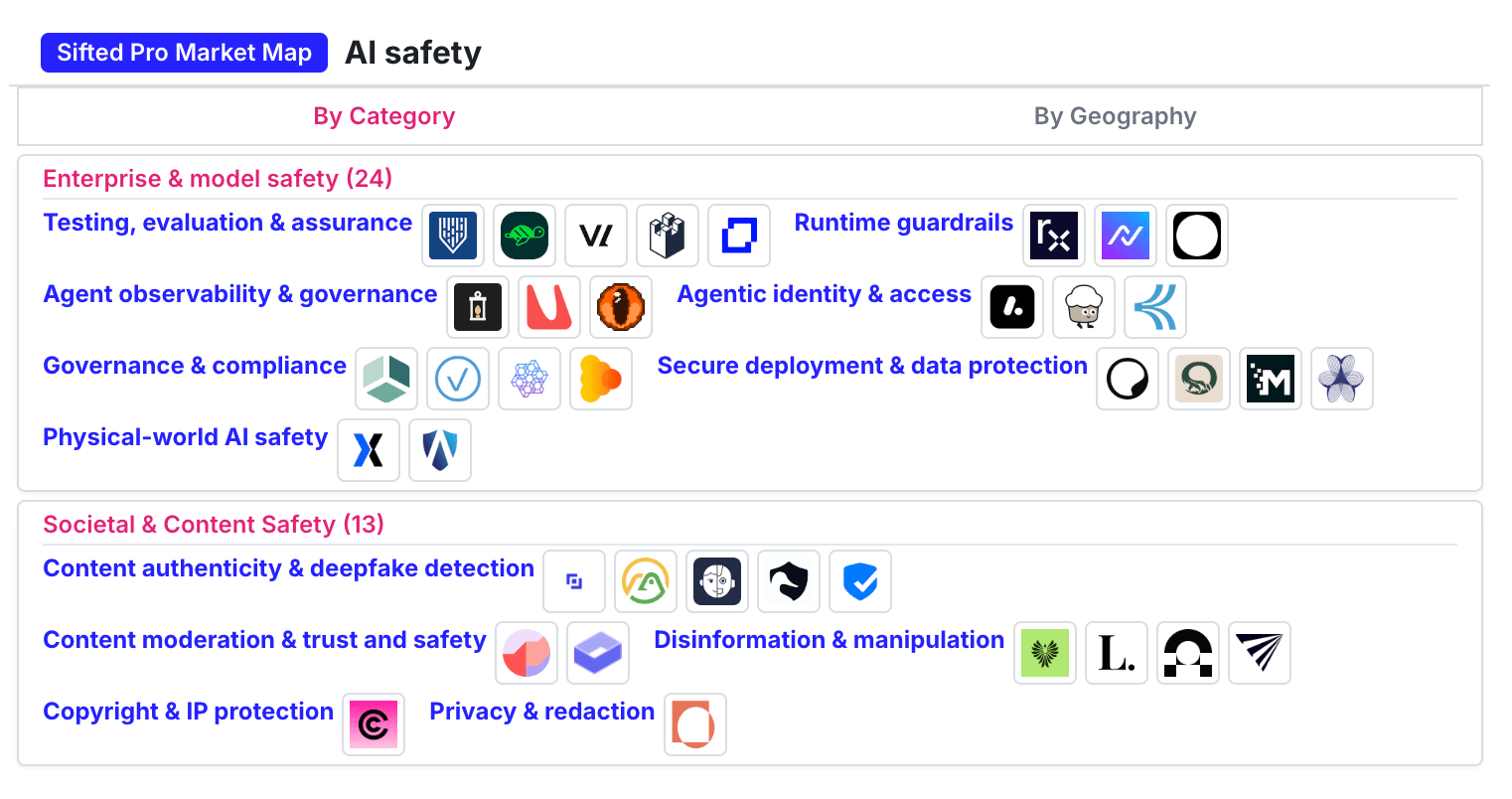
Mapping Europe's AI Safety Landscape

The European Union is rapidly solidifying its position as a global leader in AI regulation, and a new map reveals the burgeoning ecosystem of startups building the technological infrastructure to support this trust layer. Sifted has identified 37 companies across Europe dedicated to AI safety, spanning a wide spectrum of critical areas from model alignment and cybersecurity to explainability and bias detection. This surge in specialized startups underscores the growing demand for solutions that ensure artificial intelligence systems are developed and deployed responsibly, especially as AI capabilities advance at an unprecedented pace. The AI safety landscape is multifaceted. It encompasses not only the fundamental challenge of aligning AI behavior with human values but also the practical necessities of securing AI systems against malicious actors, ensuring fairness, and providing transparency into their decision-making processes. These startups are tackling problems that range from the theoretical – ensuring AI doesn't pose existential risks – to the concrete, like preventing data poisoning or mitigating algorithmic bias. The EU’s AI Act, a landmark piece of legislation, is expected to drive further innovation and adoption of these safety solutions as companies scramble to comply with its stringent requirements.

European AI safety startup founders gathered at a technology conference

Key Areas of Focus for AI Safety Startups

The 37 companies mapped by Sifted operate across several key domains within AI safety:
  • AI Alignment and Governance: Ensuring AI systems operate according to human intentions and values. This includes research into interpretability, robustness, and the prevention of unintended consequences.
  • AI Cybersecurity: Protecting AI models and data from adversarial attacks, data poisoning, model stealing, and other security vulnerabilities.
  • AI Ethics and Compliance: Developing tools and services to detect and mitigate bias, ensure fairness, and help organizations comply with evolving AI regulations like the EU AI Act.
  • AI Explainability and Transparency: Creating methods and platforms that make AI decision-making processes understandable to humans, fostering trust and accountability.
  • Responsible AI Deployment: Offering frameworks, tools, and consulting services to guide the safe and ethical integration of AI into business operations.
This categorization highlights the breadth of challenges that AI safety startups are addressing. Many companies tackle multiple facets, reflecting the interconnected nature of AI risks. For instance, a company focused on AI cybersecurity might also incorporate elements of bias detection to prevent attackers from exploiting fairness vulnerabilities. The rapid evolution of AI models necessitates a dynamic and comprehensive approach to safety, pushing these startups to innovate across these diverse areas.

Funding and Market Signals

The emergence of this concentrated group of European AI safety startups is supported by significant investment. While specific funding figures for all 37 companies are not detailed, the article points to several examples of substantial capital injections. For instance, Mistral AI, a prominent European AI company, has raised significant funding, indicating investor confidence in the region's AI ecosystem. Other companies like Hugging Face and Aleph Alpha have also attracted considerable investment, signaling a strong market appetite for AI technologies that prioritize safety and trust. The EU's regulatory push, particularly the AI Act, acts as a powerful catalyst. It creates a clear market demand for compliance solutions, incentivizing both the development of new safety technologies and the investment in companies that provide them. This regulatory certainty, combined with the increasing societal awareness of AI risks, positions Europe as a fertile ground for AI safety innovation. The focus on a regulated, trust-oriented approach differentiates Europe from other AI development hubs, potentially creating a distinct market advantage for its safety-focused startups.

The EU's Regulatory Push and Its Impact

The EU AI Act is a defining piece of legislation for the global AI landscape. By categorizing AI systems based on their risk level and imposing strict requirements on high-risk applications, the Act compels organizations to prioritize safety and ethical considerations. This legislative framework provides a clear roadmap for AI development and deployment, creating a predictable environment for both innovators and regulators. For AI safety startups, this means a direct and growing market for their solutions. Companies are now actively seeking tools and expertise to navigate these complex regulations. This includes solutions for risk assessment, data governance, transparency, and human oversight. The Act’s emphasis on conformity assessments and post-market monitoring further amplifies the need for robust AI safety mechanisms. The European Commission's own AI Safety Institute (AISI) is also playing a role in coordinating research and development in this critical area, further solidifying the region's commitment to safe AI.

Looking Ahead: Challenges and Opportunities

The burgeoning AI safety sector in Europe presents both significant opportunities and persistent challenges. As AI capabilities continue to advance, the definition of