%22%20%2F%3E%0A%20%20%3C%2Fsvg%3E)
Data Center Protests Escalate with Arrests
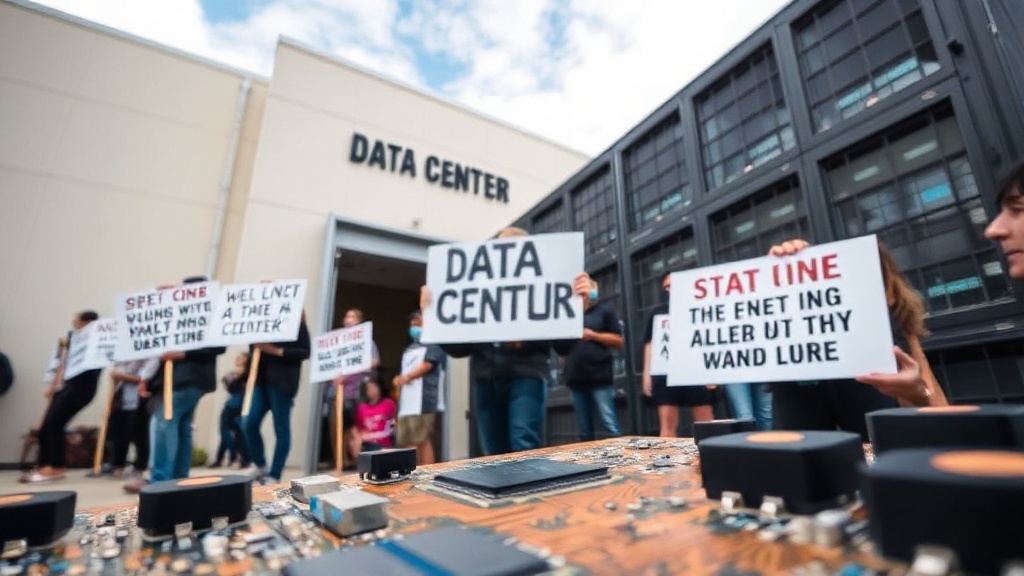
In 2026, a growing wave of protest against the proliferation of data centers has led to at least 37 arrests. While the numbers themselves are significant, the nature of the charges is drawing particular attention. Reports indicate that the majority of individuals taken into custody were arrested for minor infractions, often described as 'petty rules.' This pattern suggests a broader tension between local communities and the rapid expansion of digital infrastructure, where peaceful dissent is met with legal action for seemingly trivial offenses.
The data centers, essential components of the modern internet and cloud computing, are increasingly becoming focal points for environmental and community concerns. Protesters often cite issues such as high energy consumption, water usage, and the visual impact of these facilities on landscapes. Despite the ostensibly minor nature of the charges, the arrests signal an intensifying conflict. Beyond the arrests, there have been at least 12 documented instances where law enforcement was called to mediate between politicians and protesters, highlighting the persistent nature of these disputes.
The Nature of the Charges
The classification of charges as 'petty rules' is crucial. These infractions typically do not involve violence, significant property damage, or direct threats. Instead, they might include violations such as trespassing on non-sensitive areas, obstructing minor pathways, or failing to disperse from a location after being asked, even if the protest itself was otherwise non-disruptive. This contrasts sharply with the more serious implications that data centers can have on local resources and environments, creating a disconnect between the perceived severity of the offense and the actual concerns of the protesters.
Think of it less like a criminal enterprise and more like a neighborhood watch group being cited for lingering too long on a public sidewalk while trying to draw attention to a new factory. The tools of law enforcement, typically reserved for more serious offenses, are being deployed for what appear to be minor administrative or ordinance violations. This approach can have a chilling effect on legitimate protest, making individuals hesitant to voice concerns for fear of accumulating minor offenses that could lead to arrest and a criminal record.
Broader Implications of the Trend
The trend of arresting peaceful protesters for minor infractions has several concerning implications. Firstly, it can stifle public discourse on critical infrastructure projects that have long-term environmental and social impacts. Data centers, while powering our digital lives, are massive consumers of electricity and water. Their placement can affect local grids, water tables, and the aesthetic character of communities. When the voices of concerned citizens are met with arrests for minor rule-breaking, it suggests a system that prioritizes the unchecked expansion of these facilities over community input and environmental stewardship.
Secondly, the disproportionate response from authorities can alienate communities further. Instead of fostering dialogue and addressing legitimate concerns about energy use, land impact, or noise pollution, the focus shifts to enforcing minor regulations. This can escalate tensions and make future cooperation or negotiation more difficult. The arrests, even for petty offenses, create legal hurdles for activists, potentially impacting their ability to participate in future protests or even their employment and housing prospects.
What remains unaddressed is the long-term strategy for balancing the demand for data infrastructure with community rights and environmental sustainability. As the digital economy continues its exponential growth, the demand for data centers will only increase. Without a framework that facilitates open dialogue and addresses substantive community concerns, these localized protests and subsequent arrests are likely to become a more frequent, and perhaps more contentious, feature of the technological landscape.
The Role of Law Enforcement and Local Governance
The involvement of law enforcement in these situations raises questions about their role in managing protests related to infrastructure development. While maintaining public order is a primary function, the application of enforcement power for minor infractions warrants scrutiny. Are police departments equipped and trained to differentiate between genuine threats and peaceful expressions of dissent? The instances where police were called to mediate between politicians and protesters suggest a complex interplay between local governance, corporate interests, and community activism.
Local governments often find themselves caught between the economic promises of data center development—job creation, tax revenue—and the concerns of their constituents regarding environmental impact and quality of life. The approach taken by authorities in handling these protests can either de-escalate tensions by facilitating constructive dialogue or exacerbate them by resorting to punitive measures for minor offenses. The current pattern suggests a leaning towards the latter, potentially undermining democratic processes and community engagement.
The future of data center development will undoubtedly involve navigating these complex community relations. A more effective approach might involve proactive community engagement, transparent environmental impact assessments, and alternative dispute resolution mechanisms, rather than relying on the enforcement of minor rules to suppress dissent. The 37 arrests in 2026 serve as a stark indicator that the current methods are creating friction, not solutions, in the ongoing debate over digital infrastructure.