GDPR Consent: A Widespread Illusion
Cookie banners are ubiquitous, promising user control over data privacy. However, a recent scan of 1,775 websites reveals that for many, this promise is hollow. A significant portion of sites load tracking cookies and scripts before a user has had a chance to click "Accept" or "Reject," rendering the consent banner largely performative.
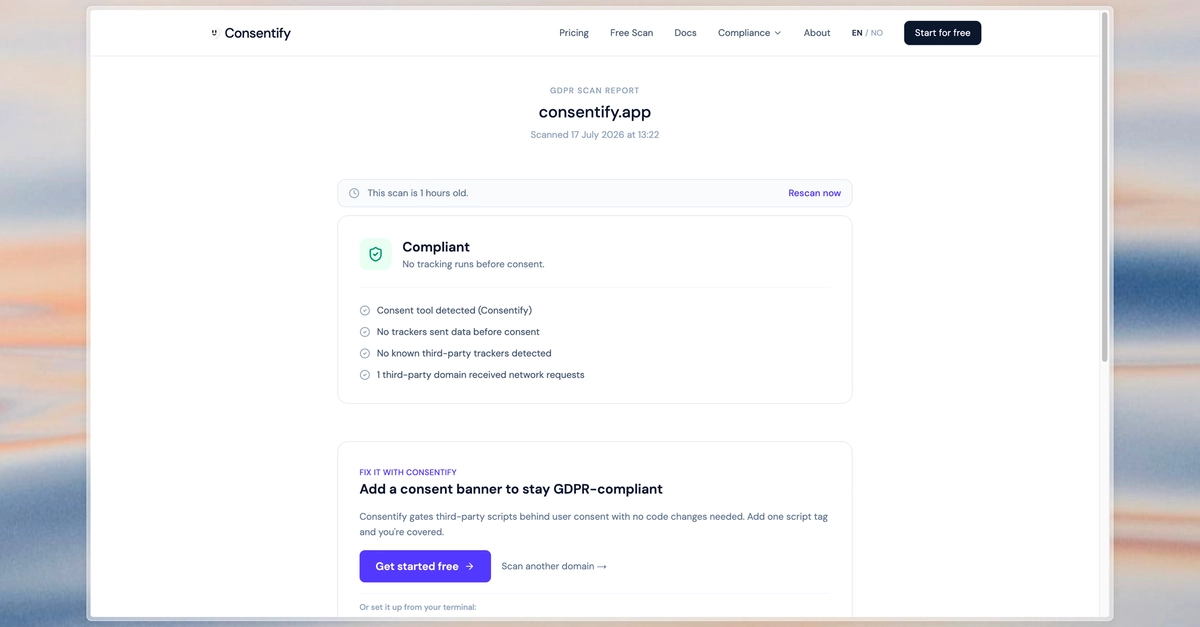
The findings come from an independent analysis conducted by a developer running a consent tool. The observation was simple: customer websites often displayed a cookie banner while analytics scripts, like Google Analytics, had already executed, set their cookies, and transmitted data. This indicated that tracking was happening passively upon page load, irrespective of user interaction with the banner.
To quantify this, a scanner was developed and deployed against a diverse set of 1,775 live websites. The tool meticulously logged all script executions and cookie set operations that occurred before any explicit user consent was granted via the banner. The results are stark: 30% of the scanned websites exhibited this pre-consent tracking behavior.
Defining a "Real Tracker Leak"
The definition of a "leak" in this context was precise to ensure accuracy and avoid false positives. A website was only flagged for leaking GDPR consent if:
- A known tracker (identified by its domain or script name) successfully set a cookie prior to the user interacting with the consent banner.
- A Google tag (such as those used for Google Analytics or Google Ads) executed its code before consent was given. This is particularly significant given Google's role in the digital advertising ecosystem and the common reliance on its services by websites.
The scanner employed a multi-layered detection mechanism. It monitored network requests initiated by the browser upon page load. Specifically, it looked for requests to domains associated with common tracking services and checked for the presence of cookies that are typically used for user tracking and profiling. For Google tags, it analyzed the execution of JavaScript snippets that are known to initiate tracking functionalities.
The methodology involved loading each of the 1,775 websites in a controlled browser environment. A timeline of all network requests and script executions was recorded from the moment the page began loading until the user interacted with the consent banner. Any tracking-related activity occurring within this pre-consent window was logged as a potential violation.
Caveats and Nuances in Measurement
While the 30% figure is a significant indicator, the developer highlighted several caveats to ensure the numbers remain honest and reflect the complexities of web tracking. These include:
- First-Party vs. Third-Party Cookies: The scanner primarily focused on third-party tracking cookies and scripts, which are more directly related to cross-site tracking and profiling. While first-party cookies can also be used for tracking, their interpretation in a GDPR context can be more nuanced, especially for essential site functionality.
- CDN Loading: Some scripts might be loaded from Content Delivery Networks (CDNs) that also host legitimate, non-tracking resources. The scanner applied a strict filter to only flag domains explicitly known for tracking purposes.
- JavaScript Execution Delays: The scanner accounted for standard JavaScript execution timing. However, highly sophisticated or evasive tracking mechanisms that delay execution further could potentially evade this specific detection method.
- Consent Banner Variations: The interaction with consent banners can vary. The scanner standardized its interaction to simulate a typical user's first exposure to the banner upon initial page load.
- Regional Differences: The scan was conducted on a broad set of websites, and while the focus was on GDPR compliance, the specific implementation and enforcement of privacy regulations can differ across regions.
Despite these caveats, the core finding remains robust: a substantial number of websites are not respecting the spirit, and potentially the letter, of GDPR consent mechanisms. The practice of loading trackers before consent effectively bypasses the user's choice, undermining the purpose of privacy regulations designed to give individuals control over their data.
Implications for Users and Regulators
The implications of these findings are far-reaching. For users, it means that their perceived control over data privacy is often an illusion. Even when presented with a consent banner, their data might already be collected and processed by third parties without their explicit agreement. This erodes trust in online privacy practices and the effectiveness of regulatory frameworks like GDPR.
For regulators, this scan provides concrete evidence of widespread non-compliance. It suggests that existing enforcement mechanisms may not be sufficient to deter websites from implementing tracking practices that circumvent user consent. Further investigation and potentially stricter enforcement actions may be warranted to ensure that consent banners serve their intended purpose.
The developer's initiative highlights a critical gap between the stated intent of privacy regulations and the reality of their implementation on the web. The scanner, while a single-person project, offers a valuable, data-driven insight into a pervasive issue that affects millions of internet users daily. The question now is whether this evidence will spur meaningful change from website operators, technology providers, and regulatory bodies.