Multi-Agent Systems Move from Demo to Production
For years, multi-agent AI systems have largely remained confined to academic research labs and developer demos, often showcased as chatbots debating abstract concepts or playing simple games. The reality of deploying these complex systems to manage real-world, high-stakes operations has been a distant prospect. That changed recently when a marketing campaign successfully leveraged 14 distinct AI agents to execute an entire influencer marketing pipeline. This wasn't a simulation; it was a live campaign that filtered 120,000 potential influencers down to a final selection of 30, ultimately improving click-through rates (CTR) by 2.7% with zero manual intervention in the core execution loop.
The architecture behind this achievement is more significant than the headline figures. It demonstrates a practical, end-to-end application of autonomous agents in a domain notorious for its manual complexity and coordination overhead. This success signals a potential shift in how businesses approach campaign management, moving from human-centric workflows to agent-driven automation.
The Bottleneck: Manual Influencer Marketing
Traditional influencer marketing campaigns are a labor-intensive undertaking. The process typically involves a human planner logging into multiple advertising platforms, manually sifting through countless influencer profiles, compiling data into spreadsheets, crafting detailed briefs, negotiating contracts, and continuously monitoring performance to adjust ad spend. Each of these steps often requires a different tool, a separate login, and the involvement of different team members or external agencies. The primary bottleneck is not a lack of creative ideas but the sheer coordination overhead involved in managing the process. This complex web of tasks is ripe for automation, and this multi-agent system offers a compelling solution.
The Agent Pipeline: From Discovery to Settlement
The system orchestrates 14 specialized AI agents, each designed to handle a specific part of the influencer marketing workflow. The entire process is automated, creating a seamless pipeline from initial candidate identification to the final settlement of ad campaigns. This comprehensive approach eliminates the need for human operators to manually execute tasks between agent functions, a critical differentiator from typical multi-agent demonstrations.
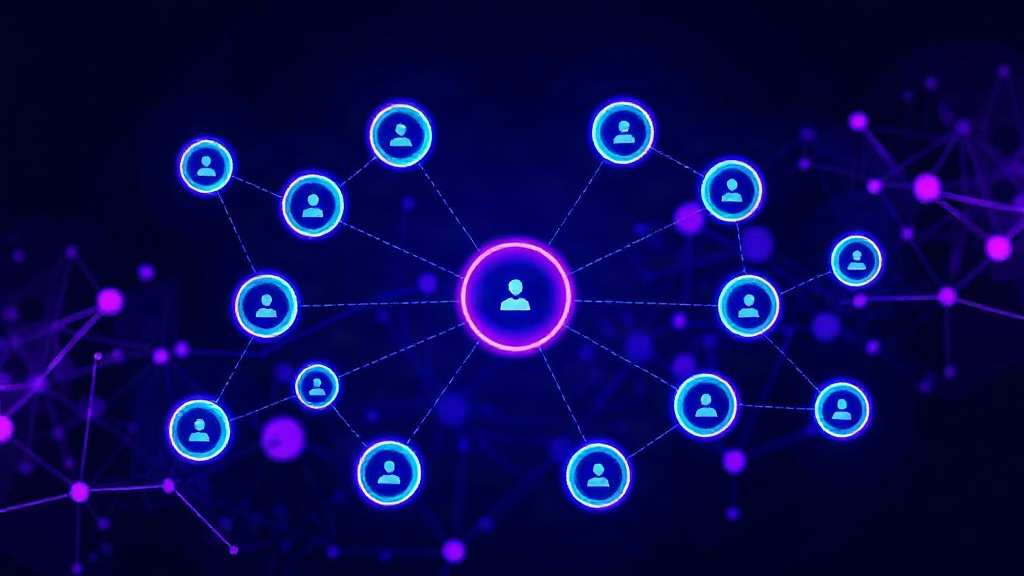
The agents collectively perform the following key functions:
- Influencer Discovery: Agents scour vast datasets to identify potential influencers based on predefined criteria such as audience demographics, engagement rates, content niche, and past campaign performance. This initial filtering reduces the pool from 120,000 down to a manageable number.
- Profile Analysis and Vetting: Once a preliminary list is generated, subsequent agents analyze individual influencer profiles in depth. This includes examining content quality, brand alignment, audience sentiment, and potential risks (e.g., fake followers, controversial past content).
- Shortlisting: Based on the detailed analysis, agents create a shortlist of the most suitable influencers, narrowing the selection down to approximately 30 candidates. This stage ensures that only the highest-potential partners are considered for the campaign.
- Brief Generation: For the selected influencers, agents automatically generate customized campaign briefs. These briefs outline campaign objectives, key messaging, content requirements, deliverables, and performance metrics, ensuring clarity and consistency.
- Negotiation and Contracting: A sophisticated agent handles the negotiation of terms and rates with the shortlisted influencers. This agent aims to secure favorable agreements while ensuring all campaign requirements are met, potentially interacting with influencer management platforms or direct communication channels.
- Performance Monitoring and Optimization: Throughout the campaign, agents continuously track key performance indicators (KPIs) such as reach, engagement, conversions, and CTR. They analyze this data in real-time to identify trends and opportunities for optimization.
- Ad Settlement: The final stages involve agents managing the financial aspects of the campaign, including processing payments to influencers and reconciling campaign spend against performance, ensuring accurate and timely settlement.
The surprising detail here is not merely the automation of these discrete tasks, but their seamless integration into a single, end-to-end operational pipeline. Most multi-agent systems struggle with inter-agent communication and state management over extended operational periods. This project demonstrates that these challenges are surmountable, enabling agents to manage complex, multi-stage business processes.
The Architecture: Beyond Simple Chatbots
The system's underlying architecture is crucial to its success. Unlike simpler multi-agent setups that might involve a central orchestrator or a series of independent agents triggered sequentially, this solution likely employs a more robust framework. This could involve a shared memory or knowledge base accessible by all agents, a sophisticated task allocation mechanism, and robust error handling and recovery protocols. The ability for agents to dynamically adapt to new information, re-evaluate decisions, and coordinate complex sequences of actions is key. The improvement in CTR suggests that the agents were not only able to execute the process but also to make data-driven decisions that enhanced campaign effectiveness. This suggests agents are capable of more than just following instructions; they can optimize for business outcomes.
Implications for Marketing and Beyond
The success of this 14-agent system in a live marketing campaign has profound implications. For marketing teams, it offers the potential to dramatically reduce operational costs, increase campaign efficiency, and achieve better results through data-driven, automated decision-making. The ability to process a massive volume of influencers and identify the optimal candidates with precision can lead to significantly higher ROI.
Beyond marketing, this deployment serves as a blueprint for applying multi-agent systems to other complex business processes. Industries that rely on extensive data analysis, multi-step coordination, and continuous optimization—such as supply chain management, financial analysis, customer support, and even scientific research—could benefit immensely. The challenge now is to scale this approach, making it accessible and adaptable for a wider range of applications.
The Unanswered Question: Agent Autonomy and Oversight
While this system successfully executed a campaign with zero manual intervention in the execution loop, it raises an important question: what level of human oversight is truly necessary for such autonomous systems? As agents become more capable of managing complex business processes, defining the boundaries of their autonomy and establishing effective human-in-the-loop mechanisms for strategic direction, ethical considerations, and crisis management becomes paramount. How do we ensure accountability when an AI system makes a critical business decision, and what frameworks are needed to govern these increasingly autonomous operational agents?