The Ubiquitous JWT Vulnerability
A recent audit of 12 open-source Node.js JSON Web Token (JWT) implementations uncovered a striking pattern: six common security mistakes appeared across nearly all projects examined. These ranged from small starter templates to production-ready boilerplates used by established companies. The findings suggest these are not isolated incidents but rather subtle, copy-paste errors stemming from widely adopted, but flawed, tutorial examples.
The developer behind the audit, who spent a month reviewing code on GitHub, emphasized that the projects themselves are not inherently bad, and the developers are skilled. The errors are insidious, often overlooked because they originate from seemingly innocuous sources. This pervasive issue highlights a critical need for deeper scrutiny of standard JWT practices in application development.
Mistake 1: The Predictable Secret
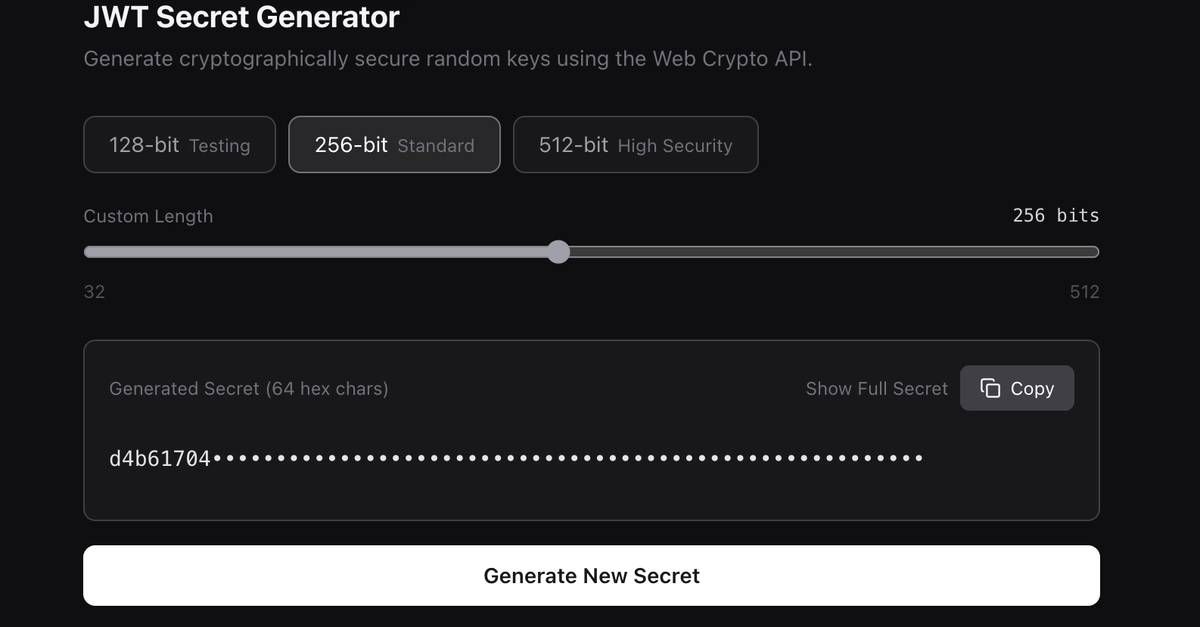
One of the most blatant and surprisingly common mistakes found was the use of the literal string "secret" as the JWT signing secret. This was identified in three separate projects. Hardcoding such a default, easily guessable secret renders the entire security mechanism of JWTs useless. An attacker needs only to know the default secret to forge tokens or impersonate users.

Mistake 2: Algorithm Confusion
Another critical vulnerability involved the misuse or lack of validation for the JWT algorithm. Many implementations failed to correctly validate the alg header parameter. This can lead to attacks where an attacker specifies a weaker algorithm (like none or HS256 when the server expects RS256) to bypass signature verification. The lack of strict algorithm checking means a token signed with one key or algorithm could be accepted as valid by a system expecting another, potentially weaker, signature.
Mistake 3: Weak Key Management
Several projects exhibited poor key management practices. This included storing secrets in environment variables without proper sanitization, using overly simple or predictable keys, or failing to rotate keys regularly. Effective key management is paramount for securing JWTs. When keys are compromised, easily guessed, or never changed, the integrity of all issued tokens is immediately jeopardized.
Mistake 4: Replay Attacks
A significant number of audited implementations were vulnerable to replay attacks. This occurs when an attacker intercepts a valid JWT and reuses it to authenticate themselves multiple times. Proper implementation requires mechanisms to invalidate tokens after use or to include time-sensitive claims like expiration (exp) and issued-at (iat) with strict validation on the server-side. Failing to implement these checks allows authenticated sessions to be hijacked simply by replaying a captured token.
Mistake 5: Improper Audience (aud) Validation
The aud (audience) claim in a JWT specifies the intended recipient of the token. Many implementations neglected to validate this claim. This means a token issued for one service or application could be accepted by another, potentially leading to unauthorized access. For instance, a token intended for an internal API might be used to access a public-facing service if audience validation is missing.
Mistake 6: Ignoring Expiration (exp)
Perhaps the most concerning mistake was the widespread failure to properly validate the exp (expiration time) claim. While tokens might have an expiration time set, the server-side validation logic often overlooked checking this value. This allows tokens to remain valid indefinitely, even if they were intended for short-term use. It effectively negates the security benefit of time-limited sessions, leaving systems vulnerable to stale, compromised tokens.
The Root Cause: Tutorial Trap
The developer highlighted that these mistakes are not necessarily a reflection of developer incompetence. Instead, they often stem from tutorials and documentation that provide simplified, insecure examples. Developers, often under time pressure, copy these snippets directly into their projects without fully understanding the security implications or the nuances of proper JWT implementation. Without critical review or a deeper understanding of the underlying cryptographic principles, these flawed patterns propagate.
The audit serves as a stark reminder that JWTs, while powerful, require careful and correct implementation. Relying on default settings or blindly following online examples can introduce significant security holes. Developers must actively validate all aspects of a JWT, including the algorithm, secret, audience, and expiration, using robust, production-ready libraries and custom validation logic.
The implications are broad. For developers, it means revisiting existing JWT implementations and ensuring they meet security best practices. For project maintainers, it's a call to action to update documentation and examples to reflect secure defaults. For the broader ecosystem, it underscores the need for more rigorous security auditing of common libraries and patterns.